
SOCRATES

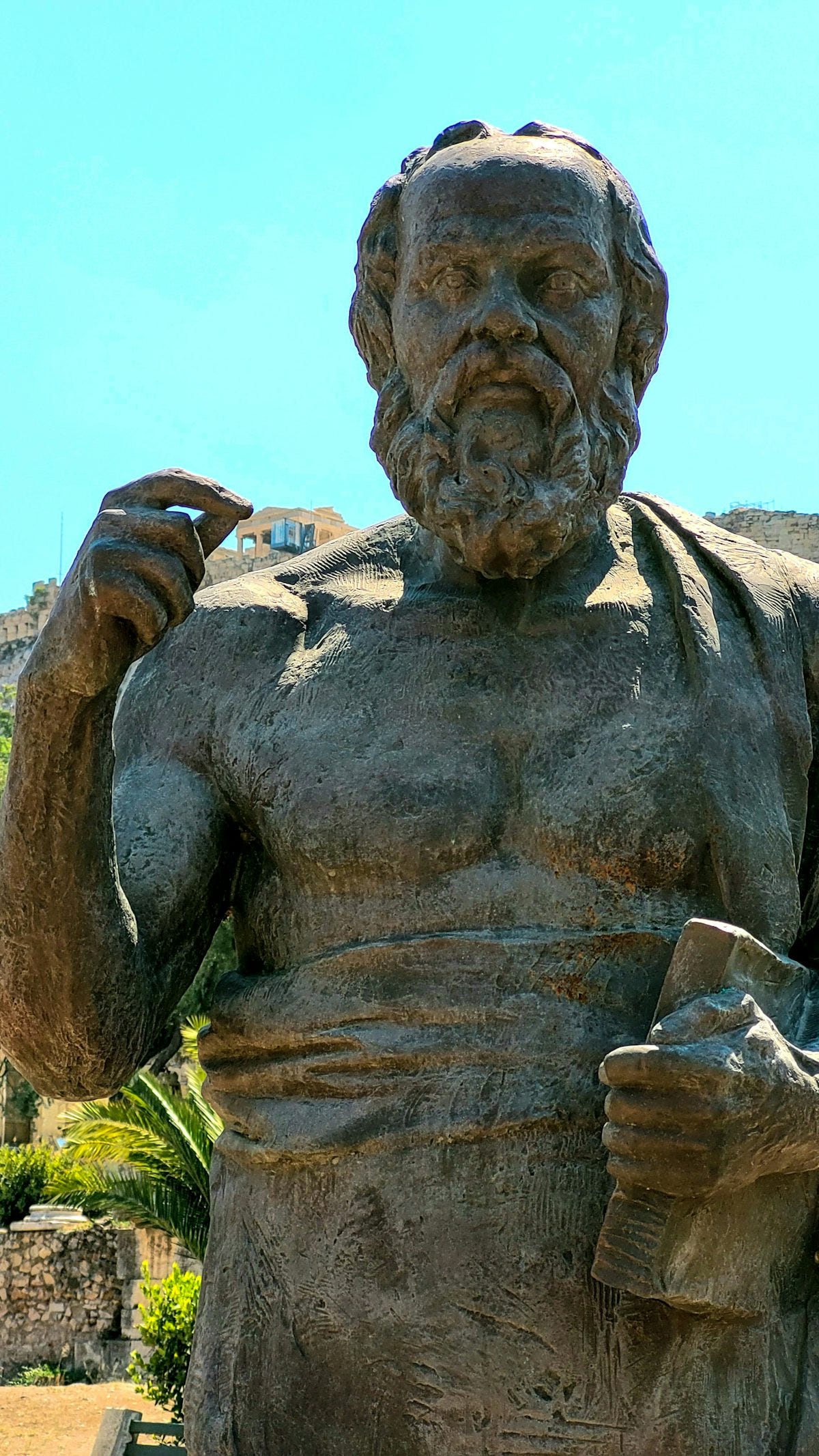
A good understanding of history helps us understand the present — and if we’re wise enough, it prepares us for the future.
In medicine, history-taking is no different. Every medical student learns early on: Get a good history, and you’re 80% closer to a diagnosis. The remaining 20%? That's for examination and investigations to fill in.
History-taking is a lifelong craft. With each patient you meet, each story you listen to, patterns slowly start to emerge.
You get faster, sharper. You recognize the shape of chest pain, the tell-tale signs of shortness of breath, the nuances of complaints that — somehow — involve the mother-in-law.
For pain — one of the most common reasons people come to the hospital — we have a neat tool: SOCRATES.
It’s an acronym that guides us through pain assessment:
▪︎Site
▪︎Onset
▪︎Character
▪︎Radiation
▪︎Associated symptoms
▪︎Timing (duration, frequency)
▪︎Exacerbating/relieving factors
▪︎Severity
It had served me well during clinical rotations.Abdominal pain. Chest pain. Musculoskeletal pain. SOCRATES, and somewhere in its neat boxes, I would find the answers. Until I met an old man — not in the hospital, but outside its walls — whose pain wasn’t the kind I was taught to diagnose. His major complaint was "pain" — pain that had lasted a year.
I thought, Perfect. I know what to do.
“Sir, what’s the site of the pain?”
“It’s everywhere. I can’t tell where exactly.”
Diffuse pain, I thought.
“Was it sudden or gradual?”
“It’s just there. I don’t know.”
“What’s the character of the pain?”
“Hard to explain.”
I fought a wave of frustration rising in me.
Another patient here to stress me out, I thought.
“Sir, does it radiate anywhere?”
“Yes. All over my body.”
I hesitated.
Something in me said — this is not going to fit into your tidy checklist.
So I paused and asked differently:
“When did you first notice this pain? What were you doing? How did it start?”
And he answered — not with anatomy or timelines — but with something heavier.
“I first felt this pain when I lost my wife and her child to an accident... a year ago.”
In that moment, SOCRATES crumbled.
No textbook had prepared me for this. No acronym could capture this kind of pain — pain that had no site, no character, no radiation — except into every crevice of his life.
This wasn’t physical pain. Or rather, it was physical, but its roots were deeper, invisible, untouchable.
And I realized: Sometimes, history-taking isn’t about checking boxes. It’s about listening beyond the symptoms — to the story beneath the story. It’s about realizing that not all pain is physical. And not all healing comes from medicine.
Some pains don’t need a diagnosis. They need a witness.
And I'm still learning to listen.
Love and Light 🍃.
🥺